Category: Uncategorized
Online Safety: KCSiE 2024 vs 2025
Online Safety: KCSiE 2024 vs 2025
Author: Jonathan Taylor MSc – Social Media & Online Safety Consultant
Purpose: Understanding the Changes in Keeping Children Safe in Education 2025 compared to KCSiE 2024 – Specific to ‘Online Safety’
Online Safety: KCSIE 2024 vs 2025 Comparison (At a Glance)
| Online Safety Topic | KCSIE 2024 | KCSIE 2025 | Notes |
| Misinformation / Disinformation / Conspiracy Theories | ❌ Not mentioned | ✅ Explicitly included. Online Fakeness and its impact on Online Exploitation (Deep Fake) (para 135) | New online harm category |
| Filtering & Monitoring – Self-assessment support | ❌ Not included | ✅ ‘Plan technology for your school’ should include discussion of School Internet Access & Data, plus Website & App restriction. (para 142) | Aids technical evaluation |
| Generative AI Guidance | ❌ Not included | ✅ Now includes importance of AI training & guidance. (para 143) | Emphasis on emerging tech |
| Cybersecurity – Emphasis on Resilience | ⚠️ Mentioned broadly | ✅ Highlights ‘cyber resilience’. should also include understanding the importance of Online Competence. (para 144) | Aligns with DfE standards |
| Annual Review of Online Safety Approach Recommended | ❌ Not mentioned | ✅ Online Safety Audit Encouraged (para 145) | Structured evaluation approach |
| Governor Oversight Tools – UKCIS ‘Questions’ Resource | ❌ Not included | ✅ Recommended. Schools should look to include Governor / Trustee training. (para 146) | Helps governors assess policies |
| 2025 -2026 Online Safety Workshops ‘At A Glance’ |
Online Safety for Schools – Staff
🔐 Key Online Safety–Related Changes from 2024 to 2025
1. Greater Emphasis on Concurrent Online and Offline Abuse
- 2025 update reinforces that online abuse often occurs simultaneously with offline abuse, highlighting how these are not isolated risks.
- It notes that children may experience abuse via chat groups, including the non-consensual sharing of indecent or abusive content, which was previously less emphasized.
2. Clarity on Filtering and Monitoring Responsibilities
- While both versions state that training must include online safety, the 2025 version puts clearer emphasis on understanding roles and responsibilities related to filtering and monitoring technologies in schools.
- References to paragraph 140 (2025) (previously para 140 in 2024) are maintained but with clearer instruction around ensuring this understanding during induction and refresher training.
3. Terminology and Links Updates
- The 2025 version standardizes references to “nude and semi-nude images and videos” (previously varied between “sexting” or “youth-produced sexual imagery”) in line with UKCIS guidance.
- More direct links are provided to updated government and UKCIS guidance documents, making it easier for staff to access practical help.
4. Online Safety in Child-on-Child Abuse
- The 2025 version more explicitly discusses online elements in child-on-child abuse, e.g.:
- Online bullying
- Harassment and misogynistic/misandrist messages
- Distribution of indecent imagery without consent
5. Online Misuse Highlighted as a Standalone Risk
- Online safety is referenced more frequently in the context of signs of abuse, reinforcing it as a core safeguarding concern rather than just an add-on.
| Category | KCSiE 2024 Guidance | KCSiE 2025 Guidance |
| Concurrent Online & Offline Abuse | Mentions online risks separately from offline abuse. | Emphasises abuse often occurs both online and offline simultaneously. |
| Filtering & Monitoring Responsibilities | Mentions filtering/monitoring in training but with less emphasis. | Clearer training requirements around filtering & monitoring responsibilities. |
| Terminology & Links | Terminology varies; ‘sexting’ and ‘youth-produced imagery’ used. | Consistent terminology: ‘nude & semi-nude images/videos’; links to UKCIS. |
| Child-on-Child Online Abuse | General mention of online bullying and harassment. | Expanded detail on online elements in peer abuse and chat groups. |
| Online Misuse as Safeguarding Risk | Online misuse is addressed but not always explicitly. | Explicitly framed as a core safeguarding issue. |
🌐 Presented by: Jonathan Taylor MSc
www.onlinesafety4schools.co.uk
📧 onlinesafety4schools@ymail.com
Self-Perpetual Radicalisation (Misogyny) in Relation to Social Media Influencers
The Influencer Ecosystem:
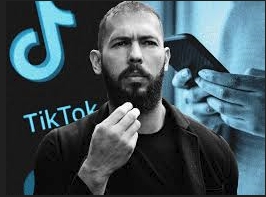
Influencers who operate in the male self-improvement space can subtly—or overtly—promote harmful gender stereotypes and misogynistic narratives. Framed as “truth-telling” or “breaking societal taboos,” their content often criticises feminism, portrays women as manipulative or inferior, and blames women for perceived male disempowerment.
Introduction:
Self-perpetual radicalisation refers to a process whereby individuals adopt increasingly extreme beliefs through self-directed online consumption, often without real-world contact with extremist groups. One of the most alarming areas of this phenomenon is the rise of misogynistic ideologies fuelled by certain social media influencers, particularly in the realms of male self-help, fitness, dating advice, and “alpha male” content.
Radicalisation Pathways:
- Echo Chambers: Followers are drawn in by surface-level advice (e.g., fitness or financial success) and gradually exposed to more extreme content, creating an ideological funnel.
- Algorithmic Exposure: Social media platforms recommend increasingly provocative content, reinforcing biased worldviews and reducing exposure to dissenting perspectives.
- Us vs Them Narratives: Misogynistic influencers frame gender dynamics as a ‘zero-sum game’, cultivating resentment toward women and championing male dominance.
- Parasocial Loyalty: Young, impressionable males may form one-sided emotional bonds with influencers, accepting their views without scrutiny.
Mechanisms of Radicalisation:
- Algorithmic Exposure &v Reinforcement: Platforms such as Snapchat, YouTube, TikTok, and Instagram reward engagement, promoting controversial or emotionally charged content that often leans toward extremism.
- Us vs. Them Narratives: Misogynistic influencers frame gender dynamics as a ‘zero-sum game’, cultivating resentment toward women and championing male dominance
- Community Formation: Followers of influencers may form tightly knit online communities, reinforcing in-group/out-group dynamics and insulating members from counterarguments.
- Narrative Control: Influencers create compelling, oversimplified narratives that blame complex problems on scapegoats or conspiracies.
- Identity Fusion: Followers often develop parasocial (online ‘hero’) relationships with influencers, aligning their identity and values with them. This fosters loyalty and receptiveness to radical views.
Impacts:
- Normalisation of Misogyny: Repeated exposure to demeaning or hostile views toward women desensitizes audiences and makes sexism socially acceptable in some circles.
- Real-World Harm: Online misogyny is linked to increased harassment, abusive behaviour, and in extreme cases, gender-based violence and hate crimes.
- Incel and Red Pill Subcultures: These online movements thrive on influencer rhetoric that vilifies women and idealizes patriarchal dominance, often wrapped in pseudoscientific or self-help language.
Case Examples:
- Influencers promoting the “Red Pill” ideology, which asserts women are inherently deceitful and that men must reclaim power through control and emotional detachment.
- Lifestyle gurus attacking feminism and encouraging followers to pursue “high-value man” status by subordinating women.
- Content creators minimizing consent or mocking female autonomy under the guise of humour or “free speech.”
Conclusion:
The intersection of influencer culture and online misogyny is a potent driver of self-perpetual radicalisation. Addressing it requires a multi-pronged approach: stronger platform accountability, early media literacy education, and the promotion of healthy, inclusive models of masculinity. Left unchecked, influencer-driven misogyny will continue to breed resentment, polarisation, and violence under the guise of entertainment or empowerment.
QR CODE FOR DETAILS CURRENT ONLINE SAFETY WORKSHOPS 
🌐 Presented by: Jonathan Taylor MSc
www.onlinesafety4schools.co.uk
📧 onlinesafety4schools@ymail.com
Social Media Influencers Are Fuelling Online Prejudice
Social Media Influencers Are Fuelling Online Prejudice
Jonathan Taylor MSc ( Onlinesafety4schools@gmail.com )
In a world where scrolling has become second nature, the influence of social media personalities goes far beyond product endorsements and viral dances. These influencers shape opinions, define norms, and—worryingly—can perpetuate deeply harmful ideas. One of the most pressing concerns today is how influencers, often unknowingly or under the guise of humour, are fuelling online prejudice.
From Influence to Intolerance

Influencers—especially those on platforms like Snapchat, TikTok, Instagram, Telegram, Discord and Twitch (etc)—command immense reach. They shape how young people think about relationships, gender, and identity. Many present misogynistic, prejudiced, or extreme content wrapped in humour or irony. This makes such content appear harmless or “edgy,” when in reality, it’s laying the groundwork for a culture of online intolerance.
The algorithms don’t help. Designed to maximise engagement, they feed users increasingly polarised content. What starts as a casual interest can quickly spiral into dangerous echo chambers filled with sexism, hate, or misinformation.
The Real-World Impact in Schools
In classrooms and school corridors, this influence is showing its teeth. Group chats filled with sexist jokes, “rating” female students, or sharing inappropriate images have become increasingly common. What’s worse, these behaviours are often dismissed as “just banter”—until the emotional or psychological harm becomes too severe to ignore.
Victims of online harassment may suffer in silence out of fear: fear of being labelled a snitch, fear of retaliation, or simply fear of not being believed. Meanwhile, those participating often fail to realise the legal and moral weight of their actions.
It’s Not Just About Gender
Online prejudice extends to race, religion, disability, sexual orientation, and more. Under the UK Equality Act 2010 and international human rights laws, these are protected characteristics. But in the wild west of digital spaces, discrimination and hate speech are frequently unmoderated—and sometimes even encouraged.
When young people engage in or witness online discrimination, it sets a precedent. Silence can look like approval. Participation becomes normalised.
Technology Isn’t Neutral
Apps and platforms play a big role in this ecosystem. From deepfake software to anonymous messaging and virtual reality spaces, the technology often enables—and even accelerates—harmful behaviour. AI-driven face swaps, “undress” apps, and sextortion scams are just a few examples of how innovation can be misused.
Even the tools meant to protect—like reporting features—are underused or distrusted by the very people they’re meant to help.
What Can Be Done?
- Think Before You Share: Ask—is it kind? Is it respectful? Is it necessary?
- Challenge Harmful Norms: Speak up in group chats. Don’t stay silent.
- Use Reporting Tools: Most platforms have them—use them.
- Support One Another: Be the friend who says, “That’s not okay.”
- Educate Continuously: Schools, parents, and communities must work together to build digital resilience.

To use the brilliant Gareth Southgate quote, “If sexist hate starts with us—it must end with boys and men.” It’s a reminder that silence can be complicity, and action—even a small one—can make a difference.
Final Thoughts
Social media can be a tool for empowerment and connection, but only if we use it with awareness and integrity. Influencers aren’t going away, nor should they—but we must hold them, and ourselves, accountable for the messages we amplify.
The digital world reflects the real one—and both deserve our respect.