Sexting or Inappropriate Images or Criminal Offence
UK Soap Opera (Coronation Street) Story Line
Asha (girl aged 14) send images and a video of herself to Corey (boy aged 16)
Circumstances; 1. Corey requested that Asha pose for him (coercion) 2. Asha then stripped and posed 3. Without Asha knowing – Corey records the screen and keeps recording on mobile phone. 4. Kelly (15) finds Coreys phone and sends video to all in a Group Chat on a messaging service – without Corey knowing. 5. Ashas father ‘Dev’ explodes and shows his anger towards his daughter.
Questions –
Who commits and offence? Does the secret recording aggravate Coreys sexual deviancy & offending ? How should the father react-what should he do?
Sexting or Inappropriate Selfies – ‘Criminal Offences ?’
Introduction
Definition: The Term Sexting is used generally to encompass a wide variety of digital activities: sending, receiving, or forwarding sexually explicit messages, photographs, or images. Although mobile phones are the most common vehicle for sexting, the term can also apply to sending sexually explicit messages through any digital media such as email, instant messaging, and/or social media sites.
What parents need to know – Facts about Sexting
Why is it a Problem: 1. A photo shared between two people can quickly become a viral phenomenon. Children & Young Adults may believe it will be kept private and then discover it has been shared widely with their peers, sometimes with grave consequences. These include arrests of teenagers who shared photos of themselves or other underage teenagers. Sexting could result in charges of distributing or possessing child pornography.
Why is it a Problem: 2. The increase in young people sexting cannot have escaped the attention of most parents. Data from police forces published in November 2017 showed a surge in children sharing or possessing sexual images of themselves or others – sometimes referred to as “Self-Generated Images” – with over 6200 incidents reported 2016-17 being an increase of 131% from 2014/2015.
73% of parents believe that sexting is always harmful.
39% of parents are concerned that their child may become involved in sexting in the future.
13% of boys and girls had taken a topless picture of themselves
55% had shared them with others
3% had taken fully naked pictures
31% had also shared the image with someone that they did not know
Criminalisation of Children
Legal Facts:
1. Age of criminal responsibility is 10 years of age – Therefore, a child age 10 and over can be reported and investigated by Police.
2. A Child is anyone under 18 years of age – Therefore sending, receiving, or forwarding sexually explicit messages, photographs, or images of anyone ‘believed’ to be under 18 may commit an offence.
3. Sexting is a criminal offence – It is illegal for anyone to take, make or share indecent images or videos of children under the 1978 Protection of Children Act – even if the image is self-generated and shared consensually.
4. Prosecution and Criminalisation – If anyone under the age of 18 but over 16 years of age is charged and prosecuted or cautioned for the offence they can be placed on the Sex Offenders Register for 2 years, anyone under 16 but over 10 years of age can be placed on the Sex Offenders Register for 1 year.
5. Outcome 21 – The Police may now decide that Offences involving sexting may be dealt with differently thereby avoiding criminalising children or causing them unnecessary fears and concerns. The ‘outcome 21’ allows Police to resolve crimes with the appropriate contextual factors in a proportionate and effective way, thus preventing children being placed on the Sex Offenders Register. However, the Outcome 21 decision and investigation has the potential for appearing on the Enhanced Disclosure and Barring Service process (old CRB check).
Why do Children get Involved in Sexting?
Children do get involved in Sexting and this is becoming the norm with teenagers, what must be remembered is that most of all images and videos are sent willingly and most likely upon request. Whilst this is a criminal offence, the reasons for taking and sharing can be very innocent and all part of growing up, understanding their own sexuality and establishing a relationship.
Teen “romance” – image / video shared willingly
Intimacy with partner – image / video shared willingly
Flirting / Prank / Joke – image / video shared willingly
Showing off (parties) – image / video shared willingly
Impulsive risk-taking – image / video shared willingly
Peer pressure – image / video shared willingly
However, whilst most images / videos are taken and shared willingly there can be unintentional consequences as a result of a breakdown in a relationship or the loss of control of the sharing of an image or video. Furthermore, there may be coercion or blackmailing as a result of online engagement with online strangers.
Revenge – image / video shared to cause Shame
Bullying or intimidation – image / video shared (Online Psychological Exploitation)
Tricked or Coerced – image / video shared (Sexually Exploited)
Blackmail – image / video shared for (Physical Financial Sexual Exploitation)
Viral Phenomenon – image / video shared exponentially (Online Reputation Damage)
What devices & platforms do Children use in Sexting?
Any device that has internet connectivity and allows for email, messaging services and/or App and gaming usage is capable of being used to send and share imagery. Mobile phones are the most popular device used for sexting followed by PC and tablets.
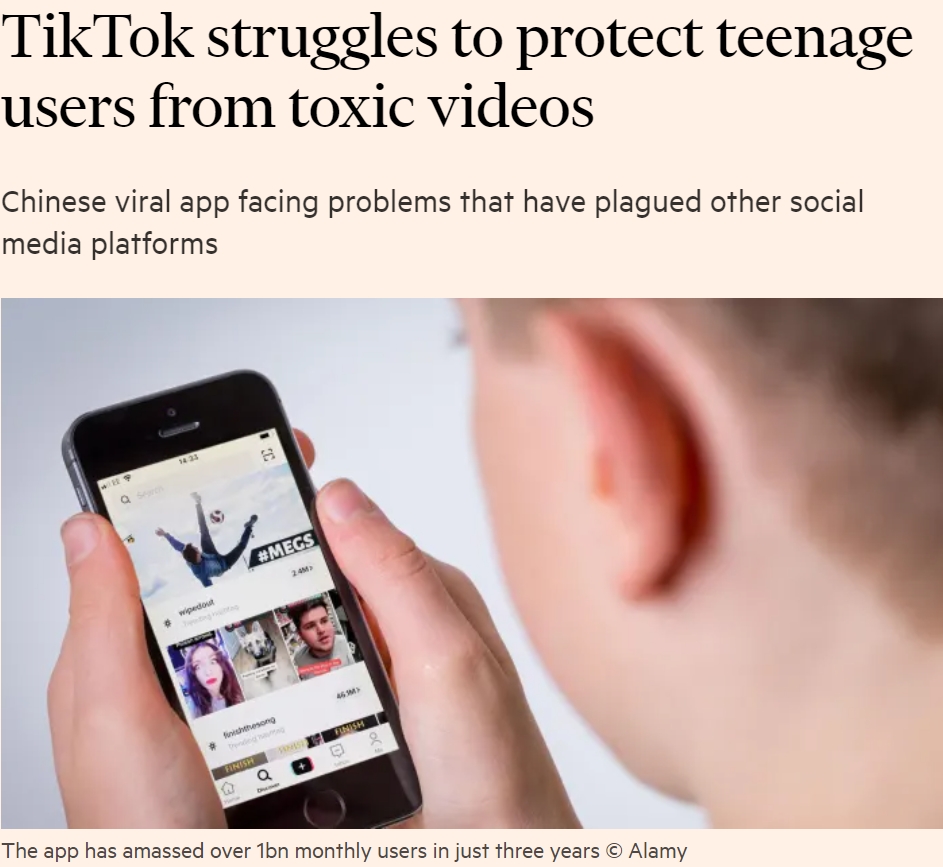
Any platforms that allows for photos, videos and live streaming are capable of being used to take, share and broadcast sexually explicit imagery. The most popular Apps and social media are Snapchat, Whats App, Instagram, Kik, Tik Tok and We Chat, with text messaging and email also being used.
Parental Advice & Top Ten Tips
Whilst Sexting is a known term for the sending or receiving of sexually explicit images or videos, it is a generally a word that is not used or accepted by teenagers, they would prefer to use the word ‘Nudes’. One reason for this is the normalising of this behaviour, another is that most children always feel a sense of embarrassment when discussing any issue with the word ‘sex’ in it. Therefore, it is worth noting that the definition of Sexting does equal the definition of Indecent Images of Children and that a ‘Sext’ could also be described as an Inappropriate Selfie. Using ‘inappropriate selfie’ with your children will allow for a less embarrassing and accepted form of discussion.
- Understand what image sharing apps / platforms are used by your children.
- Start discussions early about the risks of sexting.
- Stress that it isn’t OK to pressure someone into sexting, or to let others pressure you.
- Remind your child that once an image is sent, they can’t control or retract it.
- Stress that it is not acceptable to engage with or send personal images or videos to online strangers.
- Explain the possible legal consequences.
- Explain the possible Online Reputation consequences and the issues of Cyber Vetting by universities and companies.
- Talk with teens about sexting situations they might face, and safe responses.
- Talk to your children about what a healthy romantic relationship looks like.
- Under 14’s – Ask permission before you send a picture or video.
Jonathan Taylor MSc
ps….Now Booking for Sept 2020 onwards for Whole School Workshops email below.
besafeonline@ymail.com
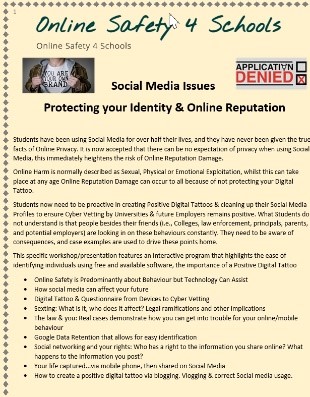
Social Media, Apps & Gaming are nothing to be afraid of, However schools must
Keep Pupils Safe Protect Educators Safeguard Schools
So What is required of schools?
Training for Teachers
Workshops for Pupils Yrs 1 – 13
Parental Information Workshops
Online Safety Policies –
Filtering & Monitoring of Internet Usage
What do All Staff Need to Know about Online Safety ?
Keeping Pace with Social Media & Online Safety Online Exploitation:Online Bullying/Online/Grooming/Online Reputation